
NFPA 70E and OSHA: Building a Practical Electrical Safety Program
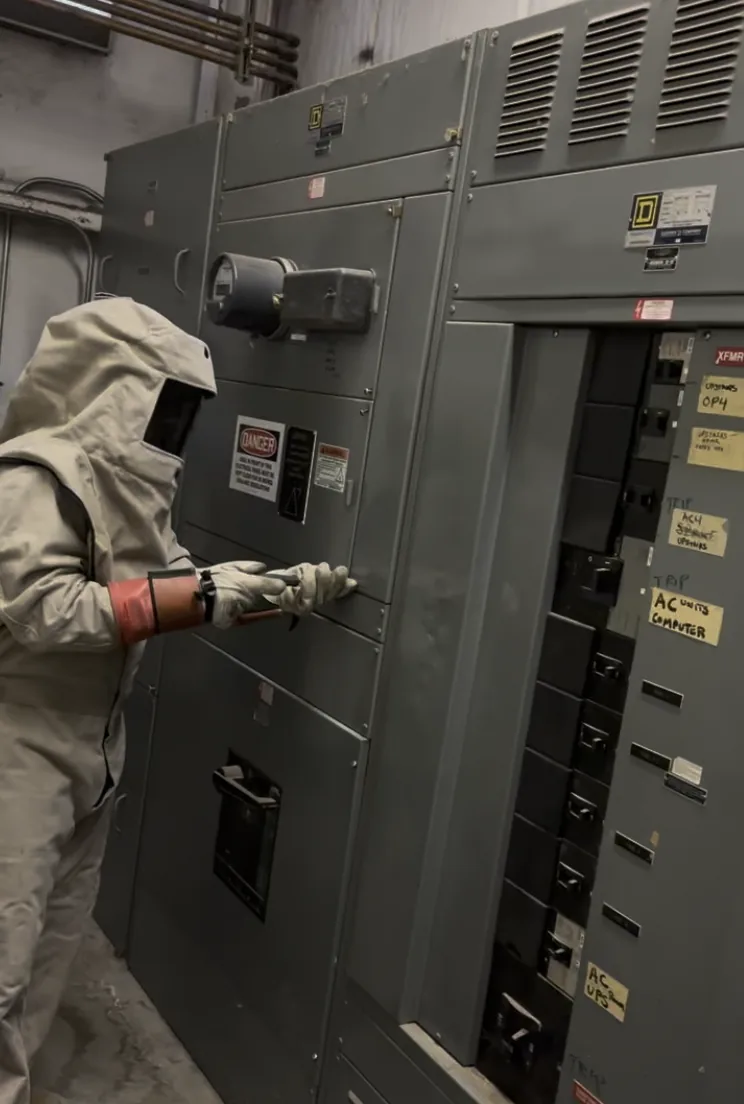
NFPA 70E is the recognized industry standard for protecting workers from electrical hazards in the workplace. While OSHA enforces legal compliance, NFPA 70E provides the actionable framework to get there. It's not just about avoiding fines—it's about creating a system that prevents injuries and fatalities through structured, field-ready processes.
The standard outlines how to assess electrical hazards, select appropriate PPE, train workers, and implement documented safety procedures. It's updated every three years to reflect changes in technology, equipment, and industry best practices, which means electrical safety programs must be living systems—regularly reviewed, updated, and reinforced through training.
OSHA vs. NFPA 70E: The Enforcement vs. the Method
OSHA sets the legal requirement to protect employees from known hazards. NFPA 70E is the method most commonly used to prove compliance with those requirements. When electrical injuries occur, investigators rely on NFPA 70E to determine whether employers took the necessary steps to identify risks and protect workers.
To meet expectations, companies need a written electrical safety program that covers more than generic safety talk. It must include:
Documented risk assessments
Arc flash and shock hazard analysis
Qualified vs. unqualified worker designation
Equipment labeling
Proper PPE issuance and training
Detailed work procedures and job hazard analyses
Incident Energy Calculations: Required for Risk-Based PPE Selection
A critical component of NFPA 70E is evaluating arc flash risk through incident energy analysis. The IEEE 1584 method is the industry gold standard for most three-phase systems between 208V and 15kV, providing accurate energy calculations based on system variables and equipment configuration. Where IEEE 1584 doesn't apply, companies may use alternate methods such as the table method or general analysis—but these have stricter limitations and may not apply to all scenarios.
Key factors that affect incident energy include:
Available fault current
Clearing time of overcurrent devices
Working distance
System voltage
Equipment type and enclosure characteristics
Accurate calculations depend on real system data, not assumptions. Relying on outdated labels or default PPE categories opens the door to liability. Energy analysis should be updated anytime major electrical changes occur or at least every five years, in line with the standard.
Qualified vs. Unqualified Employees: A Critical Distinction
Electrical safety doesn't just apply to electricians. It applies to anyone who may come near exposed conductors or equipment. NFPA 70E defines two categories of workers:
Qualified employees are those who have received specific training to recognize hazards, understand the construction and operation of equipment, and apply protective measures—including the use of PPE, test equipment, and procedures for verifying absence of voltage.
Unqualified employees must be protected by boundaries and must not perform tasks where electrical hazards are present. They still require awareness-level training so they can recognize and avoid electrical danger.
Training must be documented and include both classroom and field components. Retraining is required every three years, or immediately if conditions change or deficiencies are observed.
Hazard Assessment and Job Planning
All energized work requires a documented justification and a formal risk assessment. This includes both arc flash and shock hazards. A written Energized Electrical Work Permit (EEWP) is required when working within the restricted approach boundary or when incident energy exceeds 1.2 cal/cm² unless justified by specific exemptions.
Job planning must include:
Shock risk and boundary calculations
Arc flash analysis or table use justification
Identification of all energy sources
Coordination of roles and responsibilities
PPE selection and inspection
Use of insulated tools and test equipment
Maintenance and Unexpected Exposure
Maintenance workers and non-electricians often encounter hazards that are beyond their training. A compliant safety program must address these situations. That means:
Creating a culture of stop-and-verify
Ensuring all workers can identify when a task exceeds their qualifications
Providing a clear escalation process to reassign or replan the work
Making sure hazard reporting is encouraged and supported—not punished
Electrical safety isn't just about calculations—it's about behavior. Workers need to know how to respond to risk, not just how to avoid it.
Final Thoughts
A strong electrical safety program is more than a binder on a shelf. It's a set of behaviors, processes, and tools that reduce risk through precision and planning. NFPA 70E is the blueprint. OSHA is the enforcement. Your job is to build the system that ties it all together—accurately, defensibly, and sustainably.
Training, documentation, accurate hazard analysis, and cultural buy-in aren't optional—they're the difference between a close call and a life-altering incident.
Written by Evan Banda "WhatUp Sparky"
CESCP, Energized Work Procedures-SME
WANT TO LEARN MORE ABOUT ELECTRICAL SAFETY?
Explore our full collection of articles on electrical safety, NFPA standards, and industry best practices.